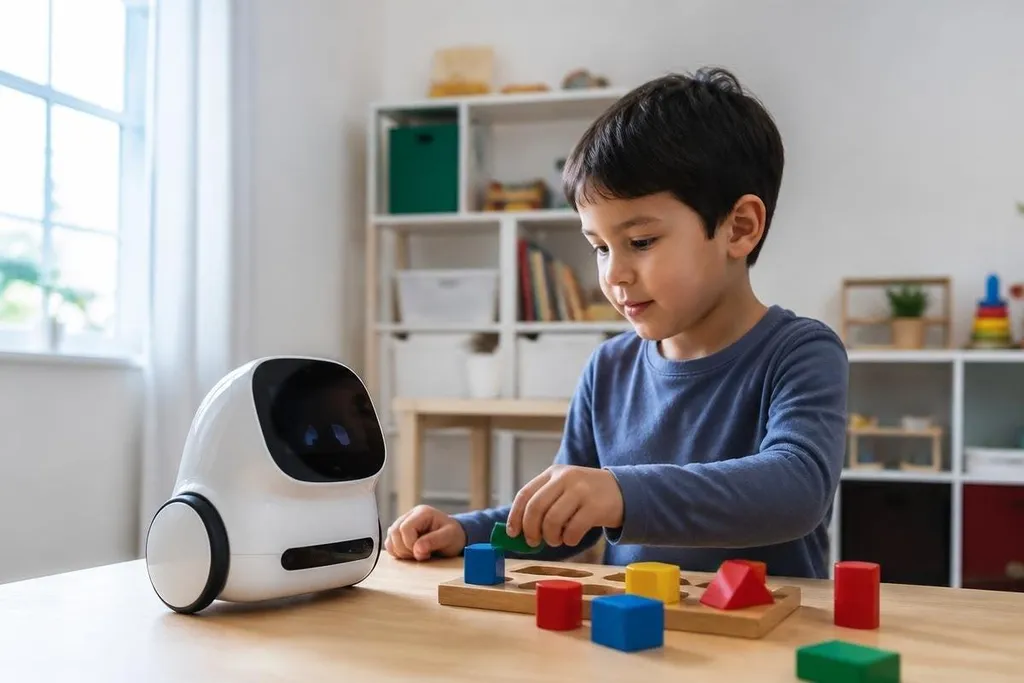
A robot can change how a child learns, plays, speaks, and handles small tasks at home or school.
The machine’s value depends less on its shape than on what the child does with it, how often an adult joins in, and what data it collects.
- More practice can help a child repeat a task
- A robot can reduce some face-to-face time
- Privacy and adult supervision need clear rules
Start with the task, not the robot
A robot may ask a child to follow steps, answer questions, move an object, or give spoken instructions. Each action creates a chance to practise attention, language, movement, or problem-solving, but the result depends on the task and the child’s needs.
A child who repeats a reading exercise with a robot may get more chances to speak. That does not show that the robot improves reading on its own. It shows that the robot can deliver a repeatable activity while an adult watches for progress.
This distinction matters because a moving machine can hold attention without teaching much. One that talks, flashes lights, and responds to touch may keep a child near it, yet the activity still needs a clear goal.
Social skills need people too
Some robots are built to respond to speech, faces, gestures, or changes in movement. Those responses can give a child practice with turn-taking and clear instructions, especially when the robot waits for an answer or asks the child to try again.
People use tone, timing, facial movement, touch, and shared context in ways a programmed system may not copy well. A child needs time with parents, teachers, and other children alongside robot-based activities.
The adult’s role is practical. They can ask the child why the robot reacted, repeat the task with a person, and check whether the skill appears outside the robot session. If a child only performs well with one machine, the activity needs a closer look.
A learning claim needs a named robot, task, and test setting. A dated robotics report on child-facing machines can supply those details, so you can judge what the child actually did before the discussion turns to risks.
What can go wrong
A robot may make a task feel easier to start, but it can also steer a child toward passive use. Pressing a button to receive an answer gives less practice than explaining a choice, fixing an error, or asking a new question.
Privacy adds another concern. One with microphones, cameras, or cloud software may collect recordings or images during normal use. Families and schools need to know what the machine records, where the data goes, how long it stays there, and who can view it.
The design can also shape behavior. One that praises every attempt may help a child keep trying, while praise that ignores poor work gives weak feedback. Children need clear limits, and the system should make it possible to pause, correct, or end the activity.
I’d keep a robot in a child’s routine only when its task is clear, its data use is known, and an adult can check the result.
A practical check before use
Use these questions before placing a robot in a home, classroom, or therapy setting:
- Name the skill. Write down the action the child should practise, such as taking turns, reading aloud, or following a sequence.
- Set the session. Choose a time limit and stop when the activity becomes tiring, frustrating, or repetitive.
- Watch the transfer. Ask the child to use the same skill with a person or without the robot.
- Check the data. Read the product’s recording, storage, deletion, and account rules before connecting it.
- Keep a human option. Make sure the child can complete the task with a teacher, parent, or peer.
What to measure next
A useful trial needs a clear starting point and a record of what changes. Note how the child handles the task before the robot arrives, what happens during robot use, and whether the skill appears later in another setting.
Those notes can separate attention from learning. A child may spend longer with a robot because it is new, yet that extra time may not lead to better speech, movement, or social behavior.
The next test is simple to state: does the child use the skill away from the machine, after the novelty wears off? Until that answer is measured, a robot belongs in the activity plan, not in the role of teacher or friend.